Have you ever received a message saying “ASL?” and wondered what it actually means? 🤔 You’re definitely not alone.
Text messaging, social media, and online gaming have created hundreds of abbreviations that make conversations faster. Some of these terms become so common that people use them without explaining their meaning. ASL meaning in text is one of those abbreviations that often confuses new users because it can have more than one interpretation depending on the conversation.
The good news is that understanding ASL meaning in text is much easier than it seems. Once you know the context, you’ll instantly recognize what the sender is asking. Whether you’re chatting on Snapchat, scrolling through TikTok, playing online games, or messaging someone new, knowing this abbreviation helps you avoid misunderstandings.
In this guide, you’ll discover what ASL means in text, where it came from, how people use it today, real-life examples, common mistakes, and modern alternatives. You’ll also learn the difference between its slang meaning and its other well-known definition so you can confidently use it in everyday conversations.
Let’s dive in! 🚀
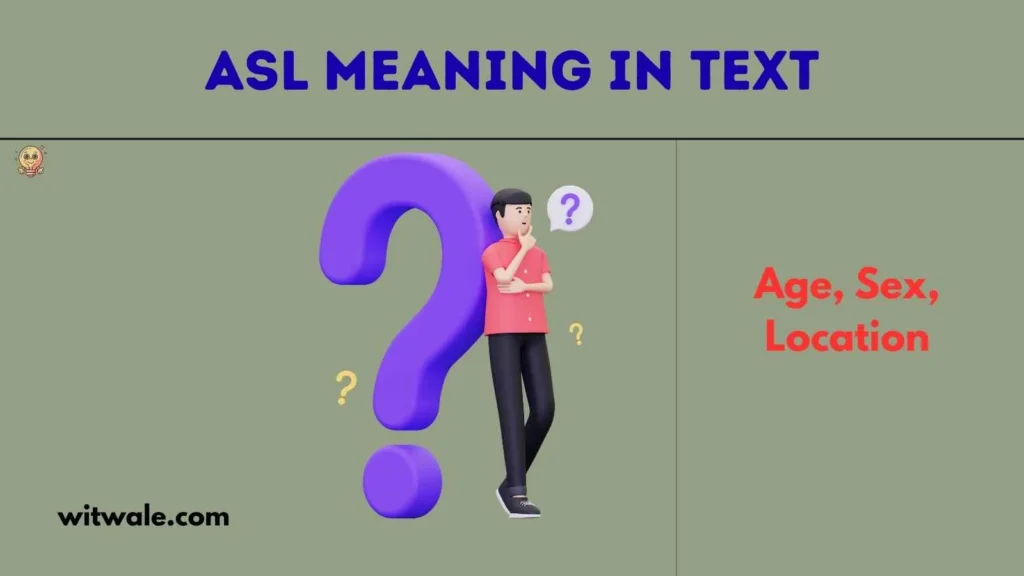
What Does ASL Mean in Text? 💬
ASL most commonly stands for:
Age, Sex, Location
It became popular during the early days of internet chat rooms when people wanted to know basic information about someone before starting a conversation.
Today, someone who sends “ASL?” is usually asking:
- 🎂 How old are you?
- 👤 What’s your gender?
- 🌍 Where are you from?
Quick Answer Table
| Abbreviation | Meaning | Common Use |
|---|---|---|
| ASL | Age, Sex, Location | Online chats |
| ASL | American Sign Language | Education and accessibility |
| ASL? | Asking for personal information | Messaging and chat rooms |
Although Age, Sex, Location is the most common slang meaning in texting, context always matters.
For example:
Person A: Hi!
Person B: ASL?
Meaning: The second person wants to know your age, gender, and location before continuing the conversation.
The Origin of ASL in Online Chats 🌐
Long before smartphones and social media existed, millions of people communicated through internet chat rooms.
Back then, typing every question separately took time. Instead of asking:
- How old are you?
- Are you male or female?
- Where do you live?
people simply typed:
ASL?
This abbreviation quickly became one of the internet’s earliest pieces of slang.
Why Did ASL Become Popular?
Several reasons helped it spread rapidly:
- ⚡ It saved typing time.
- 💬 It made introductions faster.
- 🌎 It worked in almost every chat room.
- 👥 It became a common internet habit.
As messaging apps evolved, the abbreviation remained recognizable even though people now have profile pictures, bios, and location tags.
Today, younger users may see ASL less often than older internet users, but it still appears on:
- Discord
- Snapchat
- Online games
- Dating apps
- Anonymous chat platforms
Its meaning has stayed remarkably consistent over the years.
ASL Meaning in Text on Different Platforms 📲
The meaning of ASL changes very little across platforms. However, the context can vary depending on where you see it.
ASL on Snapchat 👻
On Snapchat, someone might message:
ASL?
They’re usually asking:
- Your age
- Your gender
- Your location
Since Snapchat allows users to meet new people, this abbreviation is still fairly common.
Example:
Emma: Hey!
Jake: ASL?
Emma: 20, F, Texas.
ASL on TikTok 🎵
TikTok users sometimes use ASL in comments or live chats.
Example:
ASL anyone?
The person wants to know basic information about other users before chatting.
Occasionally, creators discussing accessibility may use ASL to mean American Sign Language, so reading the surrounding conversation is important.
ASL on Instagram 📸
Instagram users rarely use ASL in public comments.
Instead, it appears more often in private messages when someone is getting to know another person.
Example:
“Hey, ASL?”
ASL on Discord 🎮
Gaming communities sometimes use ASL when new members join a server.
Example:
Player 1: Welcome!
👥Player 2: Thanks.
Player 1: ASL?
Again, it simply asks for age, gender, and location.
ASL on Reddit 👽
Reddit discussions often use ASL in anonymous communities where users prefer not to reveal full identities.
Someone might ask:
“ASL?”
instead of writing three separate questions.
ASL Meaning in Text vs. American Sign Language 🤟
One of the biggest sources of confusion is that ASL has two completely different meanings.
Comparison Table
| ASL in Texting | American Sign Language |
|---|---|
| Age, Sex, Location | A complete visual language |
| Internet slang | Used by the Deaf community |
| Common in chats | Used for communication |
| Asks personal details | Has grammar and vocabulary |
| Informal abbreviation | Official language |
How to Tell the Difference
If someone says:
“I’ve been learning ASL.”
They almost certainly mean American Sign Language.
If someone texts:
“ASL?”
They’re asking:
- Age
- Gender
- Location
The surrounding conversation almost always reveals the intended meaning.
Examples
Example 1
“I started taking ASL classes.”
Meaning:
American Sign Language.
Example 2
“ASL?”
Meaning:
Age, Sex, Location.
Example 3
“My sister is fluent in ASL.”
Meaning:
American Sign Language.
Example 4
“ASL before we chat.”
Meaning:
Age, Sex, Location.
Understanding this distinction prevents confusion and helps you respond appropriately.
How to Respond When Someone Says “ASL?” 💭
If someone asks “ASL?”, your response depends entirely on your comfort level.
Option 1: Answer the Question
Example:
18, M, California
or
22, F, London
This is the traditional response.
Option 2: Share Limited Information
You don’t have to reveal everything.
Example:
“I’m 21 and from Canada.”
You can choose not to share information you’re uncomfortable giving.
Option 3: Politely Decline
If you don’t know the person, you can respond politely.
Examples:
- I’d rather not share personal details.
- Let’s just chat first.
- I prefer keeping that private.
Option 4: Ask Why They’re Curious
Example:
“What makes you ask?”
This keeps the conversation friendly while giving you more context.
Safety Tip 🛡️
When chatting with strangers online:
- ✅ Never feel pressured to share personal information.
- ✅ Trust your instincts.
- ✅ Protect your privacy.
- ✅ Avoid sharing sensitive details with people you don’t know.
- ✅ Remember that you control what you choose to reveal.
Being cautious online is always a smart decision, especially when conversations begin with personal questions.
Common Examples of ASL in Text Conversations 💬
One of the easiest ways to understand ASL meaning in text is by looking at real-world conversations. These examples show how people naturally use the abbreviation in different situations.
Example 1: Meeting Someone New
Alex: Hi! I saw your comment on my post.
Jordan: Hey! 😊
Alex: ASL?
Jordan: 21, F, Chicago.
Meaning: Alex wants to know Jordan’s age, gender, and location before continuing the conversation.
Example 2: Gaming Chat 🎮
Player 1: Nice game!
👥Player 2: Thanks!
Player 1: ASL?
👥Player 2: 19, M, Canada.
This type of conversation is common in multiplayer games where players are making new friends.
Example 3: Social Media DM 📱
Sam: Hey!
Taylor: Hi!
Sam: ASL?
Taylor: 24, F, Australia.
The abbreviation saves time instead of asking three separate questions.
Example 4: Anonymous Chat Room 🌍
User A: Anyone online?
👥User B: Yep.
User A: ASL?
👥User B: 20, M, UK.
Anonymous chat platforms still use this abbreviation frequently.
Example 5: Misunderstanding ASL 🤔
Emma: I’m learning ASL this year.
Ryan: Cool! What’s your age, sex, and location?
Oops! Ryan misunderstood.
Emma actually meant American Sign Language, not Age, Sex, Location.
This example shows why context is everything when interpreting abbreviations.
Different Meanings of ASL Depending on Context 🔍
Although Age, Sex, Location is the most recognized slang definition, ASL can represent different things depending on the conversation.
1. Age, Sex, Location 📲
This is the most common meaning in texting.
Example:
ASL?
Meaning:
Tell me your age, gender, and where you live.
2. American Sign Language 🤟
A complete language used by millions of Deaf and partially deaf individuals.
Example:
“I’m taking ASL classes.”
Meaning:
American Sign Language.
3. Educational Context 📚
Schools and universities usually use ASL to mean American Sign Language.
Example:
“My ASL homework is due tomorrow.”
4. Accessibility Discussions ♿
When talking about accessibility or interpreters, ASL almost always refers to the language.
Example:
“The event will provide an ASL interpreter.”
Quick Context Guide
| Situation | Meaning of ASL |
|---|---|
| Text message from a stranger | Age, Sex, Location |
| Chat room introduction | Age, Sex, Location |
| School assignment | American Sign Language |
| Accessibility discussion | American Sign Language |
| Social media DM | Usually Age, Sex, Location |
Reading the full conversation helps you determine the correct meaning.
When Should You Use ASL in Texting? ✅
Even though ASL meaning in text is widely understood, it isn’t appropriate for every conversation.
Good Times to Use ASL
Casual online chats
Gaming communities
Anonymous chat rooms
Making online friends
Group conversations where introductions are common
Times to Avoid Using ASL
Professional emails
Workplace communication
School assignments
Business conversations
Formal networking
Using ASL in professional settings may appear too informal or confusing.
Think About Privacy
Before asking someone for their age or location, consider whether it’s necessary.
Many people prefer not to share personal details with strangers.
Respecting boundaries creates a more positive online experience.
Common Mistakes People Make with ASL 🚫
Even experienced internet users sometimes misunderstand this abbreviation.
Here are the most common mistakes.
Mistake 1: Assuming It Always Means Age, Sex, Location
Not every use of ASL refers to online introductions.
Example:
“I practice ASL every weekend.”
This clearly refers to American Sign Language.
Mistake 2: Ignoring Context
Context is the biggest clue.
Example:
“My teacher teaches ASL.”
Obviously, this isn’t asking for personal information.
Mistake 3: Sharing Too Much Information
Some people respond with unnecessary personal details.
Instead of writing:
“I’m 19, live at 123 Main Street…”
Simply respond:
“19, M, California.”
Protect your privacy online.
Mistake 4: Using ASL in Formal Writing
Avoid sentences like:
“Our company requests ASL from all applicants.”
This creates confusion because readers may think of American Sign Language.
Use complete words in professional communication.
Mistake 5: Assuming Everyone Knows the Slang
Internet slang changes over time.
Some people—especially younger users—may not recognize ASL in its older chat-room sense.
If there’s any doubt, spell out your question.
Modern Alternatives to ASL 💡
Internet communication has evolved, and many people now ask questions directly instead of using abbreviations.
Here are some common alternatives.
Instead of “ASL?” Try:
- 😊 How old are you?
- 🌎 Where are you from?
- 👋 Tell me about yourself.
- 📍 Which country are you in?
- 🎂 What’s your age?
- 💬 Where do you live?
- 🌍 What part of the world are you from?
These questions feel more natural and can make conversations friendlier.
Why Many People Prefer Full Questions
Using complete sentences has several benefits.
- They’re easier to understand.
- They reduce misunderstandings.
- They’re more welcoming.
- They sound polite.
- They’re clearer for international users.
Although ASL meaning in text remains popular among some internet users, direct questions are becoming more common.
Internet Slang Related to ASL 📱
If you’re learning online abbreviations, it’s helpful to understand other popular terms that often appear alongside ASL.
| Slang | Meaning |
|---|---|
| LOL | Laugh Out Loud |
| BRB | Be Right Back |
| IDK | I Don’t Know |
| IMO | In My Opinion |
| TBH | To Be Honest |
| SMH | Shaking My Head |
| NGL | Not Gonna Lie |
| FR | For Real |
| WYD | What Are You Doing? |
| HMU | Hit Me Up |
| TTYL | Talk To You Later |
| BTW | By The Way |
Learning these abbreviations makes online conversations easier to follow.
Example Conversation Using Multiple Slang Terms
Chris: Hey!
Jamie: Hi! 😊
Chris: ASL?
Jamie: 22, F, New York.
Chris: Cool! WYD?
Jamie: Just watching movies LOL.
Chris: Same FR.
This conversation feels natural because several common abbreviations are used together.
Is ASL Still Popular Today? 📈
The popularity of ASL meaning in text has changed over the years.
During the early internet era, it was one of the most frequently used abbreviations. Today, social media profiles often display a person’s age, location, or other details, reducing the need to ask “ASL?” directly.
However, the abbreviation still appears in:
- 🎮 Online gaming communities
- 💬 Anonymous chat platforms
- 👥 Discussion forums
- 📱 Private messages
- 🌍 Social networking apps
- 🗨️ Group chats with new members
Many long-time internet users continue to use it out of habit, while younger users often prefer asking direct questions.
The key takeaway is simple: ASL is still understood, but its usage is less common than it was in the early days of the internet.
ASL Meaning in Text (Featured Snippet Summary) 📌
ASL meaning in text most commonly stands for Age, Sex, Location. It is an internet abbreviation used to quickly ask someone for basic personal information when starting an online conversation. Depending on the context, ASL can also mean American Sign Language, especially in educational, accessibility, or community discussions. Reading the surrounding conversation is the easiest way to determine which meaning is intended.
Expert Tips for Using ASL Correctly 💡
Understanding internet slang is useful, but using it wisely is even more important. Here are some expert tips to help you use ASL meaning in text naturally and respectfully.
Always Consider the Context
Before assuming what ASL means, look at the conversation around it.
For example:
- If someone asks “ASL?” in a private chat, they usually mean Age, Sex, Location.
- If someone mentions learning ASL, they almost certainly mean American Sign Language.
Context helps you avoid misunderstandings.
Respect Privacy
Not everyone is comfortable sharing personal information online.
If you ask someone ASL?, understand that they may choose not to answer. Respecting their decision creates a safer and friendlier conversation.
Avoid Using ASL in Professional Communication
Although ASL meaning in text is widely recognized in casual chats, it doesn’t belong in professional settings.
Instead of writing:
ASL?
Write:
- What city are you based in?
- Could you tell me a little about yourself?
Complete questions sound more professional and leave less room for confusion.
Keep Your Responses Brief
If you decide to answer ASL?, there is no need to overshare.
A simple response like:
23, F, Florida
or
20, M, India
is enough.
Avoid sharing private details such as your exact address, phone number, workplace, or school with people you don’t know.
Stay Updated with Internet Slang
Online language changes quickly. While ASL has been around for decades, new abbreviations appear every year.
Learning common texting terms helps you:
- 📱 Understand conversations faster
- 💬 Communicate more naturally
- 🤝 Connect with people online
- 🚀 Keep up with internet culture
Quick Recap Table 📝
| Question | Answer |
|---|---|
| What does ASL mean in text? | Age, Sex, Location |
| Is ASL internet slang? | Yes |
| Can ASL mean something else? | Yes, American Sign Language |
| Is ASL still used today? | Yes, but less often than before |
| Should you share personal details? | Only if you’re comfortable and it’s safe |
| Where is ASL commonly used? | Chats, gaming, forums, social media, and messaging apps |
When to Use and When to Avoid ASL 📊
| Situation | Use ASL? |
|---|---|
| Casual chat | ✅ Yes |
| Online gaming | ✅ Yes |
| Social media DMs | ✅ Yes |
| Anonymous chat rooms | ✅ Yes |
| Business emails | ❌ No |
| School essays | ❌ No |
| Job applications | ❌ No |
| Professional meetings | ❌ No |
This simple guide makes it easier to decide whether ASL meaning in text fits the conversation.
Why Understanding ASL Matters 🌍
At first glance, ASL may seem like just another internet abbreviation. However, understanding it can improve your online communication in several ways.
Better Conversations
Knowing what ASL means helps you reply confidently without confusion.
Stronger Digital Literacy
Internet slang is part of modern communication. Learning common abbreviations makes it easier to navigate social media, forums, and messaging apps.
Improved Online Safety
Recognizing when someone asks for personal information allows you to decide how much you want to share.
Fewer Misunderstandings
Because ASL has two widely recognized meanings, understanding the context helps you respond appropriately every time.
FAQs
What does ASL mean in text?
ASL meaning in text usually stands for Age, Sex, Location. It is commonly used to ask someone for basic personal information during an online conversation.
Does ASL always mean Age, Sex, Location?
No. Depending on the context, ASL can also refer to American Sign Language. Reading the surrounding conversation will usually make the intended meaning clear.
Is ASL still used in 2026?
Yes. While it is less common than it was during the early days of internet chat rooms, many people still use ASL in gaming communities, forums, messaging apps, and anonymous chats.
Is it safe to answer ASL?
You should only share information you feel comfortable revealing. It’s always a good idea to protect your privacy when chatting with people you don’t know.
What should I reply if someone sends “ASL?”?
You can:
- Answer briefly if you’re comfortable.
- Share only part of the information.
- Politely decline.
- Ask why they want to know.
There is no obligation to reveal personal details.
Final Thoughts 🎯
Understanding ASL meaning in text helps you communicate with confidence in today’s digital world. While the abbreviation most commonly means Age, Sex, Location, it can also refer to American Sign Language, making context the key to interpreting it correctly.
Whether you’re chatting on social media, joining an online game, or messaging someone for the first time, recognizing how ASL is used can prevent confusion and improve your conversations. At the same time, remember to protect your privacy and only share personal information when you feel comfortable doing so.
Internet slang continues to evolve, but ASL remains one of the most recognizable abbreviations in online communication. Knowing its meaning ensures you’re better prepared for modern digital interactions.

I’m a language and communication enthusiast who specializes in explaining word meanings, text abbreviations, slang terms, and internet expressions in a simple way. My goal is to help readers quickly understand the meanings behind everyday words and online conversations with clear, easy-to-read explanations.